

Designing structured digital learning products aligned to defined outcomes and scalable delivery ecosystems
Learning-First
Approach
If you are establishing
instructional direction or aligning to standards
Learning Product & System Modernization
If you are transforming
a legacy product portfolio or rationalizing offerings
Learning Design and Digital Learning Products
If you are designing
or building a new digital learning product
AI-Enabled Content Modernization
If you are adding AI
to existing production workflows
Digital Content Transformation
If you are moving from print
or legacy formats to digital ecosystems
Automated Content Maintenance & Updates
If you are sustaining, refreshing,
and keeping content current at scale
Our multidisciplinary teams bring expertise in instructional design, media production, technology integration, editorial development, and delivery management. Each digital product is developed within defined outcome architecture and aligned to business, academic, or workforce objectives.
Products are not developed in isolation; they are structured to integrate within broader learning ecosystems.
Digital Learning Product Portfolio
We design and build a range of digital learning products — either as standalone assets or as coordinated components within comprehensive courseware ecosystems.
Visual learning assets support concept clarification, skill demonstration, and applied understanding through structured multimedia storytelling.
Applications include:

Explainer videos:
Break down complex concepts into concise visual explanations that support rapid comprehension.
Animated sequences:
Use motion graphics or character-based storytelling to illustrate processes, relationships, and conceptual frameworks.
Whiteboard animations:
Present step-by-step explanations through illustrated visual narratives that reinforce sequential understanding.
Interactive video experiences:
Allow learners to actively participate by making choices, exploring paths, or engaging with embedded questions.
Video assets are integrated within defined instructional frameworks to support measurable outcomes.
Structured digital courseware is typically delivered through learning management systems integrating multimedia content, assessments, and interactive learning components and integrates:
Courseware is adaptable across pedagogical models and delivery formats, incorporating:
Design ensures outcome alignment and scalability across platforms.

Visual media enhances conceptual clarity and applied understanding.
Media assets are developed using evidence-informed visual communication strategies aligned to instructional objectives.

Instructor-led and virtual instructor-led programs require structured facilitation materials to ensure delivery consistency.
Deliverables include:
Materials are designed to support structured facilitation and measurable learning progression.
Applied learning environments bridge theory and practice through structured experiential models.
Decision-based learning environments that require learners to apply knowledge and judgment in realistic situations. Formats include:

Interactive environments replicating real-world systems for hands-on practice.
Examples include:
Digital laboratory environments supporting scientific experimentation and experiential exploration.
These tools strengthen problem-solving, applied reasoning, and skill transfer.
Applying game mechanics to learning environments to increase engagement and reinforce learner motivation.
Key Features

Incorporating progression frameworks, points, and achievement models within program design.
Embedding game mechanics directly within instructional content and assessment tasks.
Using structured digital games or simulations as primary learning vehicles, particularly in K–12 and workforce training contexts.

Benefits
Games create immersive environments where learners receive immediate feedback, practice decision-making, and develop applied competencies.

K–12 Applications
Workforce Training Applications
Game-based learning supports deeper engagement while reinforcing practical skill application.
Augmented Reality (AR) and Virtual Reality (VR) create immersive learning environments that allow learners to explore concepts and practice skills in realistic digital contexts.
Applications include:
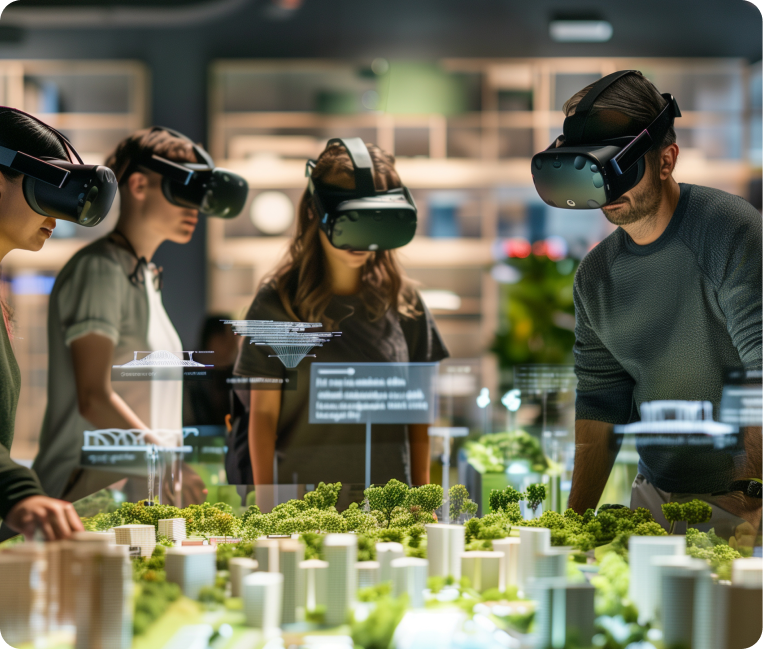
These technologies are most effective when integrated within structured instructional frameworks that support experiential learning.

A skilled trades higher education institution relied on legacy physical textbooks for aviation programs and required scalable digital transformation aligned to modern delivery standards.

We converted legacy materials into structured digital courseware, integrating interactive components, assessments, and instructor support materials within a cohesive online learning environment.

A skilled trades higher education institution relied on legacy physical textbooks for aviation programs and required scalable digital transformation aligned to modern delivery standards.
We converted legacy materials into structured digital courseware, integrating interactive components, assessments, and instructor support materials within a cohesive online learning environment.